Morocco Road Trip Itinerary
A Moroccan road trip works at three lengths: seven days for a single loop (Marrakech-Aït Benhaddou-Merzouga-Fès, finishing by train), ten days for the classic imperial-cities-plus-desert circuit, and fourteen days if you want to add the Atlantic côte from Essaouira down to Agadir. Below is the ten-day itinerary that fits most travellers: it covers the four imperial cities (Fès, Meknès, Rabat, Marrakech), one night in the Sahara, and the High Atlas crossing, with realistic daily distances and zero white-knuckle drives. Skip the rushed seven-day version unless your dates allow no flex; you will spend three of the seven days in the car.
The quick answer
Rent a manual diesel from Casablanca or Marrakech for $35 to $55 a day depending on season. Drive the loop: Marrakech → Aït Benhaddou → Dadès gorges → Merzouga → Fès → Chefchaouen → Rabat → Marrakech. Average daily driving is 3 to 5 hours, with one 6-hour day across the Tizi n’Tichka pass and the desert run. Drop the car back where you picked it up; one-way fees add $80 to $150 and the time saved rarely justifies the cost.
The ten-day route, day by day
Day 1: Marrakech (arrive, settle)
Land at Marrakech-Ménara, taxi to the médina, drop bags at the riad in the Mouassine or Kasbah quarter. No driving today; you do not want your first encounter with Moroccan motorists to be in the péri-urbain dépose-minute scrum at the aéroport. Spend the afternoon walking the Mouassine alleys to Jemaa el-Fnaa, eat at Café Clock or Nomad for dinner. Sleep early; tomorrow starts at 7 a.m.
Day 2: Marrakech to Aït Benhaddou (190 km, 4 hours with stops)
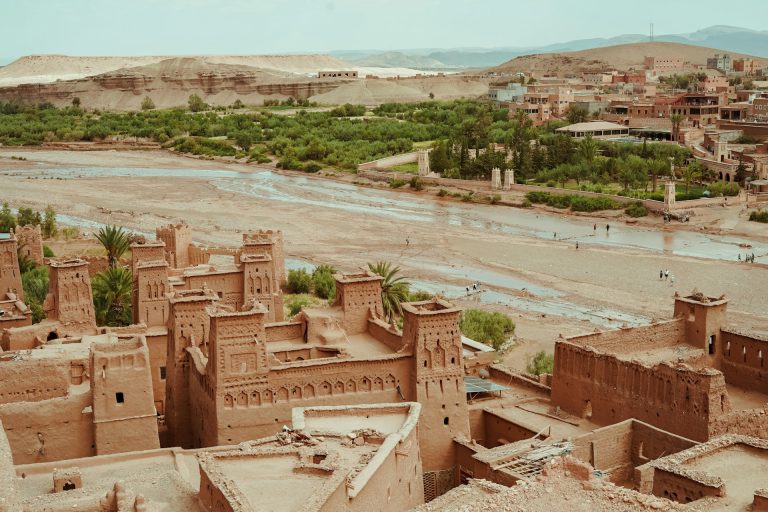
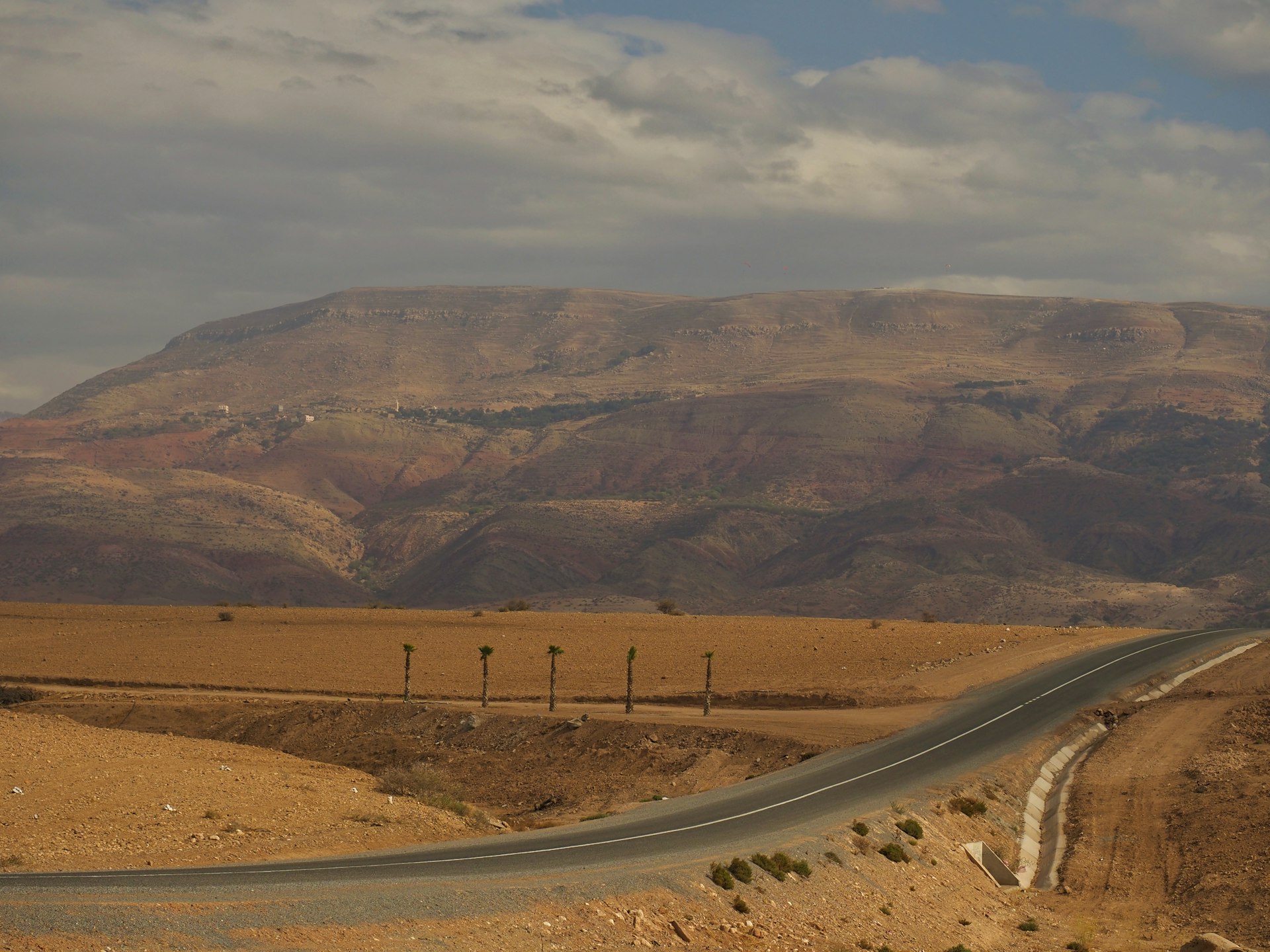
Pick up the rental at the Avis or Hertz dépôt near the train station at 8 a.m. Drive the N9 south over the Tizi n’Tichka pass, the most dramatic road in Morocco and the one that climbs to 2,260 metres before dropping into the south. Lunch at the Restaurant Belle Vue at the col itself (tajine for 60 dirham, the view down the Drâa side is the photograph). Arrive at the ksar of Aït Benhaddou by 3 p.m., walk the lower mud-brick lanes before the tour buses leave, sleep at Riad Caravane or one of the small kasbah-hôtels across the river from the UNESCO site.
Day 3: Aït Benhaddou to Dadès gorges (170 km, 3.5 hours)
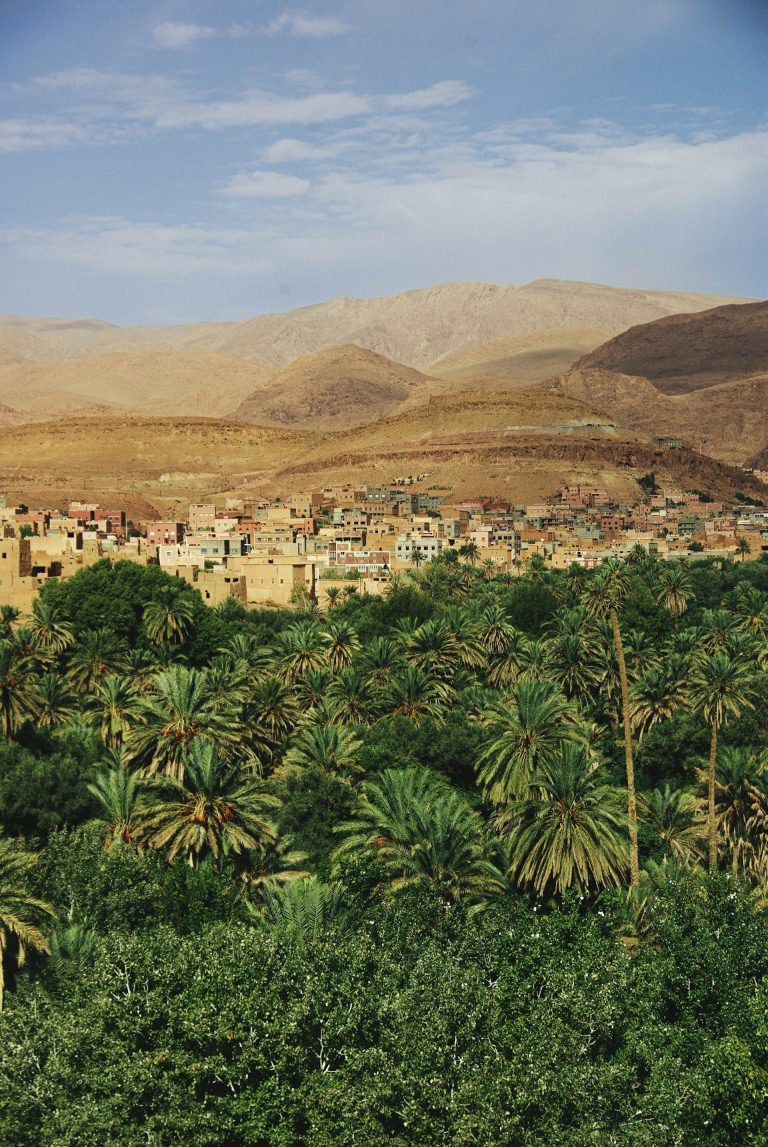
Slow morning at Aït Benhaddou: climb to the ksar’s high agadir (granary) at sunrise for the long shadow on the eastern face. Drive the N10 east through Ouarzazate and Skoura (palmeraie stop for thé à la menthe at the Bagdad Café), arrive at Boumalne Dadès by 3 p.m. The afternoon’s drive up the Dadès into the gorges is the highlight of the day: the road climbs through monkey-finger rock formations to the Hôtel Chez Pierre at km 22, where you sleep with the gorge directly below your window. Dinner is included; the chef makes a properly braisé épaule d’agneau with prunes.
Day 4: Dadès to Merzouga (300 km, 5 hours)
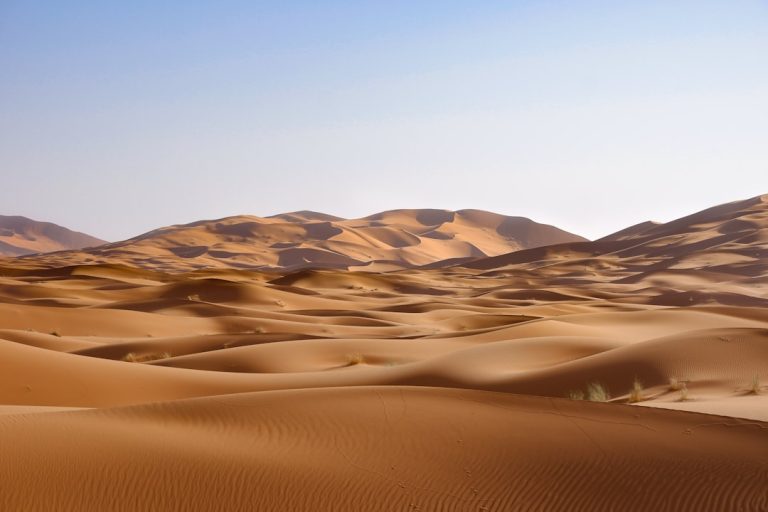
The longest driving day. Down the Dadès, east on the N10 to Tinghir, then through the Todra gorges (allow an hour for the walk under the high walls, where the river still runs in spring). On to Erfoud and Rissani, then south to Merzouga and the edge of Erg Chebbi. Park the rental at the camp’s secured lot; switch to the camp’s camel train for the 90-minute ride into the dunes. Sleep in the camp, full Berbère dinner, music around the fire after.
Day 5: Erg Chebbi to Fès (470 km, 7 hours)
The longest day on paper but driveable with two stops. Sunrise camel ride out, breakfast at the camp, on the road by 9 a.m. North on the N13 through Erfoud, Errachidia, and the Ziz valley, then over the Tizi n’Talghemt (1,907 m) and into Midelt for lunch (apple-orchard café, three for the price of one in town). Push on through Azrou and the cèdre forêt to Ifrane, then into Fès. Arrive at the médina riad by 6 p.m., the parking is at the Hôtel Batha lot outside Bab Boujloud (50 dirham/night, guarded).
Day 6: Fès (full day, no driving)
Walk the médina with a guide booked at the riad (300 dirham for 4 hours, the only acceptable price). Hit the Chouara tanneries, the Al-Qarawiyyīn courtyard, the Bou Inania madrasa, lunch at Café Clock in the médina. Afternoon free: the Marinid Tombs viewpoint above the city, or the potter’s quarter in Aïn Nokbi for tagines straight from the wood-fired kiln. Sleep again at the riad; the car stays parked.
Day 7: Fès to Chefchaouen (200 km, 4 hours)
North on the N6 to Meknès (one-hour stop for the Mechouar and the Bab el-Mansour gate), then west on the N13 across the Rif foothills to Chefchaouen. The road climbs into the blue town over the last 40 km, with views of the Talassemtane peaks above. Arrive by 3 p.m., park outside Bab el-Aïn (the Andaluz lot, 30 dirham/day), walk into the blue lanes. Sleep at Casa Hassan or Lina Ryad in the upper médina; dinner on the Place Outa el Hammam.
Day 8: Chefchaouen to Rabat (260 km, 3.5 hours)
Down out of the Rif on the N16 to the Atlantique côte at Larache (Lixus Roman ruins worth an hour), then south on the A1 autoroute (the only true motorway you will drive on the trip) to Rabat. Arrive by 3 p.m., park inside the médina (the Riad Kalaa courtyard or the Mamounia lot), walk the Kasbah des Oudayas at sunset, dinner at Le Dhow on the river.
Day 9: Rabat to Marrakech via Casablanca (340 km, 4.5 hours)
South on the A3 autoroute. Casablanca is the standard halfway stop: 90 minutes at the Hassan II mosque (book a guided visit online for 130 dirham; the only working mosque in Morocco that admits non-Muslims), lunch at Rick’s Café for the kitsch or at Sqala for the better food, then on to Marrakech. Arrive at the Marrakech médina by 5 p.m., drop the car at the Avis or Hertz dépôt near the train station.
Day 10: Marrakech (depart)
Morning at the Jardin Majorelle and the Yves Saint Laurent museum (book the combined ticket online to skip the queue), lunch at Bahia Palace’s nearby café, taxi to Marrakech-Ménara for the flight out. The trip ends where it started; the rental is already returned; the car-related anxiety is behind you.
Driving tips that matter in Morocco
- Speed limits are enforced. 120 km/h on the autoroute, 100 km/h on the dual carriageway, 60 km/h through villages, 40 km/h in school zones. The gendarmerie sets up speed traps on the descent into every town; missed limit = 300 to 700 dirham, payable on the spot in cash. Slow down on the village approach signs.
- Petrol is cheap by European standards, expensive by U.S. standards. About 12 dirham per litre ($1.20), or roughly $4.50 per gallon. Diesel is 10 dirham/litre. Fill up before crossing the Tizi n’Tichka or the Tizi n’Talghemt; the next station after the pass can be 80 km away.
- Driving at night is the one thing to avoid. Rural roads have unlit lorries, cyclists, donkeys, and the occasional sheep crossing. Plan all driving to arrive at the next stop by 6 p.m. between November and February, by 8 p.m. between April and October.
- Roundabouts: priority is for the car already in the rond-point. Same as France, opposite of the U.K. The Casablanca rond-points are the trial by fire; if you survive the first one, you can drive anywhere in the country.
- Carry the documents in the glovebox. A gendarme at a control may ask for permis (international driving permit recommended, although the U.S./E.U. licence is technically accepted), carte grise (the rental car’s registration, which the agency provides), and assurance papers. Have them in a single folder; the check takes ninety seconds.
Which rental, where, and how
The cheapest reliable rental for the loop is a manual diesel hatchback (Dacia Sandero, Renault Clio, Peugeot 208) from one of the international agencies (Hertz, Avis, Europcar, Sixt) at the Marrakech-Ménara or Casablanca arrivals. Local agencies (DiscoverCars partners, Medloc, Aboutour) are 20 to 30 percent cheaper but the documentation and the insurance handling are slower if something goes wrong on the road. Book the rental 4 to 6 weeks ahead for the July-August peak, 1 to 2 weeks ahead for shoulder season.
Insurance is the trap. The rental’s base cover usually carries a 15,000 to 25,000 dirham excess (about $1,500 to $2,500), which any small contact in a rond-point can hit. The agency will offer to remove the excess for 50 to 100 dirham per day; this is the right purchase. Skip the additional “premium” packages; the basic excess waiver is what protects you. A 4×4 (Dacia Duster, Suzuki Jimny) is unnecessary for this itinerary; the highest road point you cross is paved tarmac.
Common questions
Is the Tizi n’Tichka as dangerous as it sounds?
The Tizi n’Tichka has a reputation worse than the actual road. The pass climbs to 2,260 metres in a series of switchbacks over 80 km, with sections of two-lane tarmac and frequent lorry traffic; it is not a motorway. The widening project completed in 2024 replaced the worst single-lane sections with a proper dual carriageway, and the surface from the Marrakech side to the col is now the smoothest stretch of mountain road in the country. The danger is not the road but the descent: the brakes on a small rental cool slowly after a long downhill, so use low gears on the descent into Aït Benhaddou and stop at the col café for fifteen minutes if your wheels smell of brake pad. In winter (December to February), the col occasionally closes for snow; check the ANAR (Agence Nationale des Autoroutes du Royaume) road status site before you leave Marrakech. Outside winter, the drive is uneventful for a careful driver and the views from the col on a clear day are the trip’s first big moment.
Can I do this trip without speaking French or Arabic?
You can do the entire trip with English. The riad receptions in Marrakech, Fès, Chefchaouen, and Rabat speak fluent English; the tour guides at the Hassan II mosque, the Aït Benhaddou ksar, and the Jardin Majorelle offer English-language tours; the camp staff at Erg Chebbi speak English at the level required for ordering tea and explaining the camel ride. The places where some French helps are: the gendarmerie at a road check (a polite “bonjour, voici le permis” softens the interaction), the petrol-station attendant (Moroccan attendants often speak Arabic and French but limited English), and the rural café where you stop for lunch (the menu is usually French only). Google Translate’s offline French dictionary covers all three cases; English alone gets you 95 percent of the way.
How safe is it for solo travellers to drive the loop?
The loop is safe for solo drivers of any nationality and any gender; Morocco’s road-trip infrastructure is built for the European weekend traveller and the French summer-holiday market, both of which include single travellers in significant numbers. The risks are the standard ones: a flat tyre on the N9 between Ouarzazate and Boumalne (the AAA-equivalent breakdown number for Hertz is on the steering wheel sticker, average 90-minute wait), a minor fender-bender at a rond-point (the police arrive in 15 minutes, the rental agency handles the rest), and the heat in summer (carry 4 litres of water in the boot from May to September, the engine cooling system on a small diesel does not like a hot afternoon on the Drâa road). The single best safety measure is to plan your daily distance realistically and never drive when tired: half of all Moroccan road accidents involve a foreign rental driver who underestimated the curve or the dawn glare.
Bottom line
The ten-day Marrakech loop is the right Moroccan road trip for most first-time visitors. Book a small diesel manual with the excess waiver, leave the autoroute for the segment Larache to Rabat, drive only in daylight, and treat the Tizi n’Tichka with respect but not fear. If you would rather let someone else drive the desert leg, compare desert tours from Marrakech before you book the flights, so that the rental pickup time aligns with your arrival schedule rather than being a slot you race to make.