Best Desert Tours from Marrakech
Three Sahara tours leave Marrakech every morning at roughly the same hour: a 1-day Agafay rock-desert dinner trip, a 2-day Zagora budget loop, and the canonical 3-day Erg Chebbi run via Aït Benhaddou. They are not interchangeable. The Agafay is a sunset photograph and a tagine, not a desert. The 2-day Zagora is six hours each way for thirty minutes of sand. Only the 3-day Erg Chebbi delivers the actual Sahara, and the price gap between the cheapest and the worst of that category is $80. This article ranks what to book and what to skip.
The quick answer
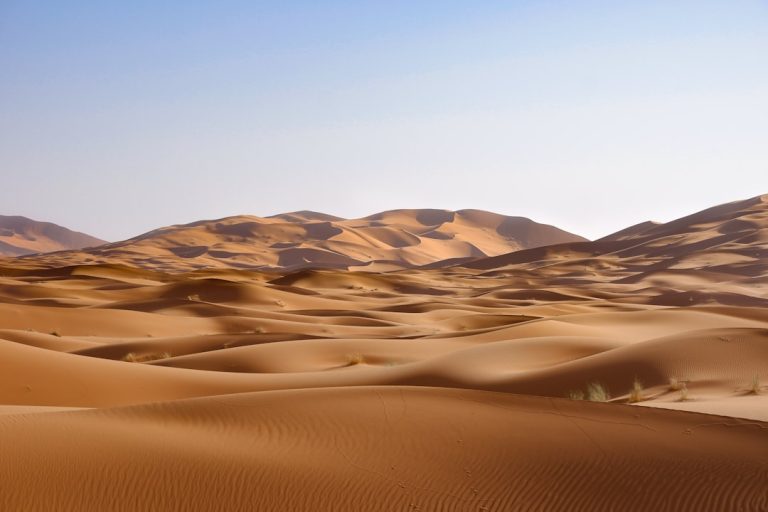
Book the 3-day Erg Chebbi shared tour (Marrakech → Aït Benhaddou → Dadès → Merzouga → Marrakech) for $130 to $190 per person on GetYourGuide or directly with Sahara Trip Marocco. Add the optional $40 luxury-camp upgrade for the southern dunes. Skip the 2-day Zagora option entirely (you spend two days driving for thirty minutes of inferior dunes). The Agafay sunset-dinner at $35 per person is fine as an evening out of Marrakech but is not a Sahara experience and the marketing that suggests otherwise is misleading.
Quick picks by trip type
- Two days in Marrakech total, want a desert moment: Agafay sunset dinner, $35 to $55, half-day return.
- Three days available, real Sahara required: Shared 3-day Erg Chebbi via Aït Benhaddou, $130 to $190.
- Four days, private comfort: Private 3-day Erg Chebbi with a driver-only 4×4, $480 to $750 total for two.
- Five days, deeper Sahara: Erg Chigaga via M’hamid, $320 to $540 per person, two desert nights, fewer camps around you.
- One day, no time to leave the périphérique: Atlas day-trip to Imlil and the Tahanaoute valley, $50 to $70. Not a Sahara trip but a better use of one day than the Agafay rebranded as one.
Comparison table: dune time for the price
| Tour | Days | Real dune time | Per-person | Vehicle |
|---|---|---|---|---|
| Agafay sunset-dinner | ½ | 0 (no dunes) | $35–55 | Shared minibus |
| Zagora 2-day | 2 | 30 min | $60–95 | Shared minibus |
| Erg Chebbi 3-day shared | 3 | 16 hours (one camp night) | $130–190 | Shared minibus, 12–16 pax |
| Erg Chebbi 3-day private | 3 | 16 hours (one camp night) | $240–375 each (×2) | Private 4×4, 1–4 pax |
| Erg Chigaga 5-day via M’hamid | 5 | 36+ hours (two camp nights) | $320–540 | Shared 4×4 from M’hamid |
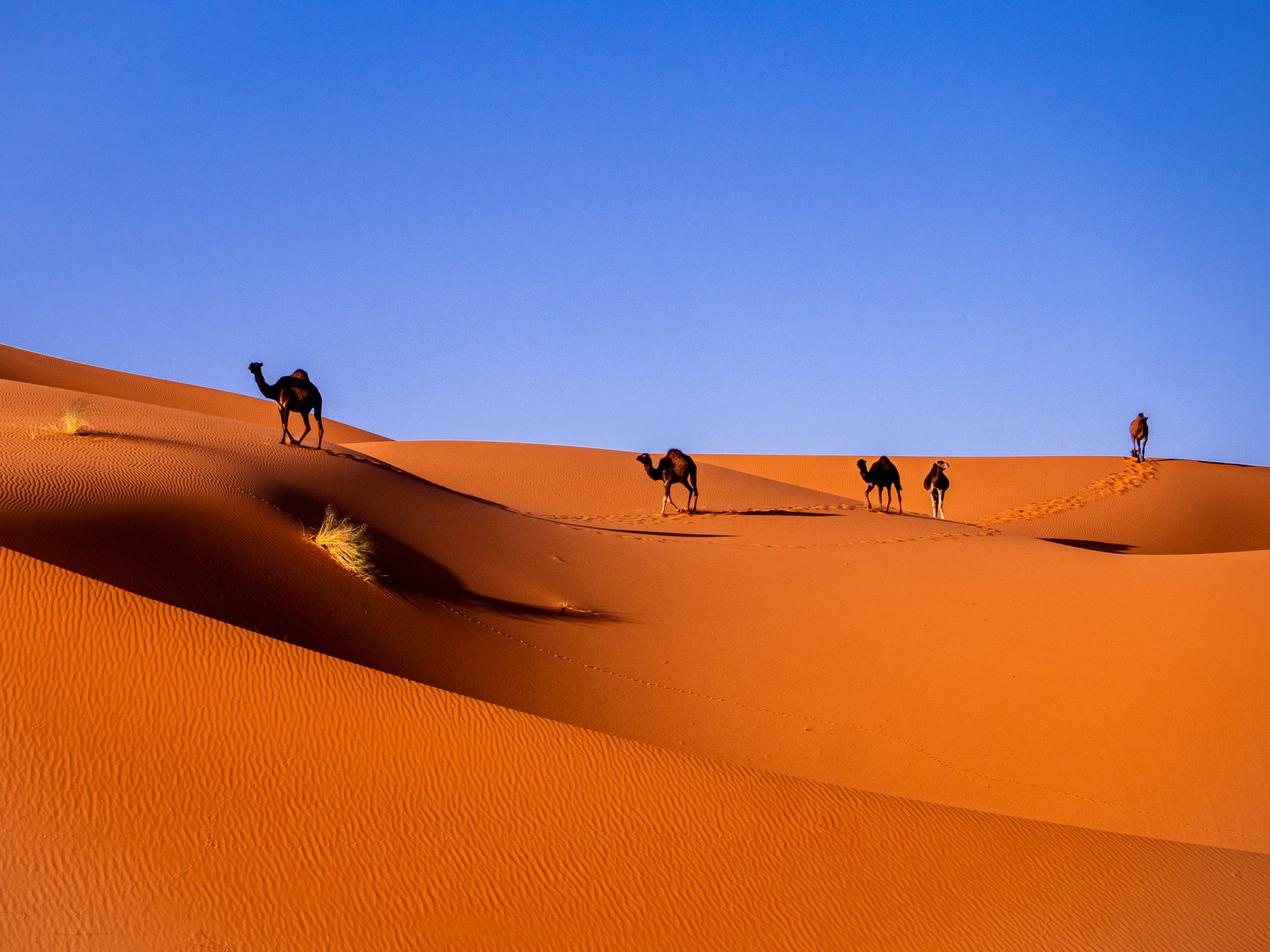
The “real dune time” column matters more than the day count. A 2-day Zagora that promises a Sahara experience delivers 30 minutes of actual sand on a single sunset ridge; the rest is driving. A 3-day Erg Chebbi delivers 16 hours of real dune time including the sunset ride in, the night at camp, and the sunrise ride out. The unit price per dune-hour is the only metric that filters out the marketing.
Tour reviews: the operators worth booking
1. Sahara Trip Marocco, the shared-group default
Sahara Trip Marocco runs the standard 3-day shared Erg Chebbi route in 12-to-16-person minibuses out of the Marrakech médina at 7 a.m. The price is $145 per person including transport, two nights of accommodation (one at a kasbah-hôtel in the Dadès, one at the desert camp), the camel ride, and breakfasts. The route stops are prévisibles (Aït Benhaddou, the Atlas Studios drive-by at Ouarzazate, the Dadès gorges, a thé à la menthe halt at the col) and the guide is functional rather than memorable. The desert camp is at the eastern edge of Erg Chebbi, a 90-minute camel ride from the village of Hassi Labied. The dinner is tajine, the sleeping is in canvas tents with shared latrines and bucket showers. For most first-time travellers this is the right shared booking; nothing is broken, nothing is exceptionnel, and the price is the lowest in the reliable fourchette.
2. Marrakech Desert Tours, mid-tier comfort upgrade
Marrakech Desert Tours offers the same 3-day Erg Chebbi route at $185 per person but in smaller groups (6 to 8 in a Mercedes Vito, not a minibus), with a better kasbah-hôtel in the Dadès gorges and a désert camp on the quieter southern end of Erg Chebbi with proper fixed-frame tents, électricité, and a real hammam-style washing area. The dinner is a step above the shared-group default (a Berbère m’choui option on request the day before, instead of the standard tajine), and the guide on the desert leg is a local from Merzouga who knows the dune ridges by name. The $40 price premium over Sahara Trip Marocco is the right spend for couples and small groups; the difference is felt on every leg of the trip, not only the desert night.
3. Private 4×4 with driver, the flexible upgrade
Operators like Maroc Excursion, Travel Exploration Morocco, and Inside Morocco Travel arrange private 3-day Erg Chebbi tours in a Toyota Land Cruiser or Hyundai H1 with a driver-guide. Two people pay around $520 to $700 total; four people pay $700 to $980 total. The advantage is full flexibility: stop where you want, sleep at the kasbah-hôtel of your choice, take the longer back route via Skoura’s palmeraie if you have an extra hour. The disadvantage is the cost-per-head is higher and the driver-guide’s English is sometimes weaker than the standard tour guides. The right pick for couples on a honeymoon, families with children whose tolerance for a 12-person minibus is limited, and anyone who plans to add a side trip to Aït Bouguemez or the M’goun valley on the way back.
4. Nomad Excursions, the 5-day Erg Chigaga specialist
Nomad Excursions, based in M’hamid, runs the 5-day Erg Chigaga loop from Marrakech with two desert nights at their own camp in the deeper southern erg. The cost is $480 per person all-in, including the Marrakech-to-M’hamid transfer (one night in Ouarzazate or Aït Benhaddou en route), two camel-and-4×4 nights at the Chigaga camp, and the return transfer. The Chigaga camp is two hours by 4×4 from the M’hamid track, properly isolée, with a clear-sky observation deck for the Voie Lactée and a small mejlès tent for the after-dîner thé à la menthe. For travellers who have already seen Erg Chebbi or who specifically want the darker night sky, this is the route. For a first Sahara trip with only 5 days available, Erg Chebbi shared at the lower price gets you the same dune experience without the longer transfer.
5. Agafay sunset-dinner (the half-day alternative)
Operators like Inara Camp, Scarabeo Camp, and a dozen others run a 5 p.m. minibus from the Marrakech médina to the Agafay rock-désert, 30 minutes south of the city. The package includes a short camel ride on stony hills (not dunes), a sunset photograph against the Haut Atlas backdrop, a three-course Moroccan dîner (often a chicken tajine au citron confit, sometimes a kefta) under tented shade with a fire, and the return drive by 10 p.m. The cost is $35 to $55. As an evening out it is pleasant; as a Sahara substitute it is misleading. The marketing on aggregator sites that calls this “the Marrakech Sahara desert tour” is the most common mistake first-time visitors make. Treat it as a dinner with a view, not as the desert.
The route and what you see along it
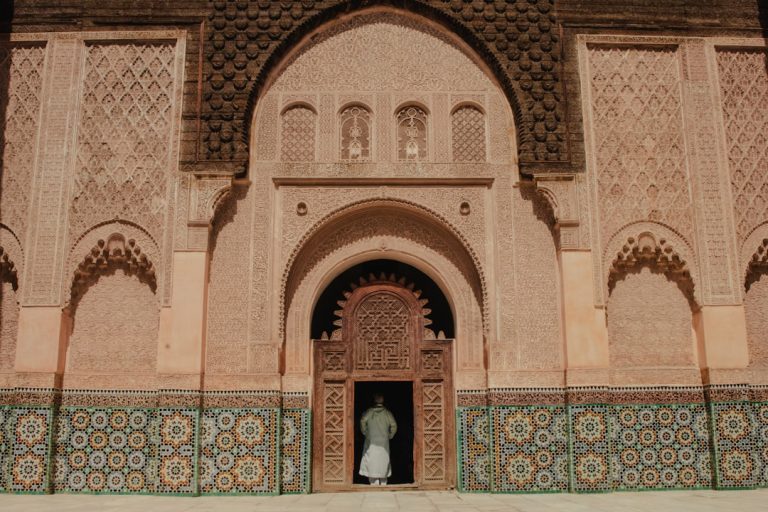
The standard 3-day route covers more than the désert alone. The first morning’s drive over the Tizi n’Tichka pass climbs through Berbère villages perched on the southern slope of the Haut Atlas: Taddert at km 60, Tichka village at the col, then the long descent into the pre-Sahara. The lunch stop at Aït Benhaddou is the UNESCO ksar that hosted scenes from Gladiator, Lawrence of Arabia, and Game of Thrones; the high agadir (granary) on the south side gives the best view of the mud-brick complex from above. Most tours allow an hour and a half here, enough for a walk through the lower lanes and a thé à la menthe at the café below the ramparts before the afternoon push to Ouarzazate.
The second day winds along the Dadès and Todra gorges, two limestone canyons cut by rivers that still run in spring. The Dadès palmeraie at Skoura, halfway between Ouarzazate and Boumalne, is a kasbah-strewn oasis with the restored Kasbah Amridil and the working Bagdad Café, both worth a 30-minute stop. The Todra gorges further east have walls 300 m high and 10 m apart at the narrowest section: park at the upstream lot, walk the riverside path 800 m, take the photograph from inside the gorge looking up at the strip of sky. The afternoon’s drive past Tinerhir and Erfoud to Merzouga crosses the Aït Atta tribal territoire that runs from the Jbel Saghro to the Algerian frontière, country that read empty until you spot the goat herds and the rétroviseur of a 1980s Peugeot pickup parked behind a dune.
What to avoid: the four common booking traps
- The 2-day Zagora “Sahara” tour. Two days in a minibus, one night at the Zagora town gîte, thirty minutes of unimpressive dunes. The price is low ($60 to $95) because the value is low. Either commit to the 3-day Erg Chebbi or pick the half-day Agafay; the 2-day Zagora is the worst of both options.
- The “free” hotel-included upgrades on aggregator sites. A tour at $120 advertised as “with hôtel pickup” is almost always at the lowest end of the shared-minibus standard; the included hôtel night in Marrakech the night before is a $20 backpacker room. Read the included accommodation rating on the booking page, not the headline price.
- Operators promising “private camp” for shared-tour pricing. The math does not work: a real private camp at the south end of Erg Chebbi costs the operator $150 a night to staff. If your $145 shared tour includes a “private camp”, you are at a 16-person canvas-tent bivouac that is sharing the ridge with three other tour groups, not at a real private camp. Pay the premium or skip the promise.
- Tour bookings made the night before from a riad walk-in. The riad concierge takes a 15 to 25 percent commission from the operator. The same tour booked on GetYourGuide or direct with the operator is 15 to 25 percent cheaper, with the same vehicle and the same camp. Book before you arrive in Marrakech; the savings cover a dinner.
Common questions
Is the camel ride uncomfortable?
The camel ride on the standard desert tours lasts 60 to 90 minutes each way, walked at a slow pace by a guide on foot. The saddle is a wooden frame padded with blankets; the ride is slow and the camel is patient. For most travellers the ride is novel and uneventful; some report sore inner thighs the next day from the unusual stretch, others find the sway pleasantly soporific. The two practical tips: wear long, loose trousers (the saddle rubs bare skin in the heat), and ask the guide to adjust the stirrups before you set off if your legs do not naturally reach the foot loops. Children over six handle the ride; children under six often ride in front of a parent on a shared saddle. The return ride at sunrise is shorter and cooler than the sunset ride in, and most travellers prefer it.
Should I worry about the rough roads or the heat?
The roads from Marrakech to Merzouga are paved tarmac the entire way; no off-road sections are involved in the standard 3-day tour. The Tizi n’Tichka pass and the Dadès gorge approach are the dramatic stretches; both are properly engineered and the minibus drivers run the route four times a week. Motion sickness is the one real risk: the constant climbing-and-descending of the Atlas crossing combined with switchback turns turns sensitive travellers green by km 80. Take a Stugeron or Dramamine an hour before the morning departure if you are prone. Heat is a summer issue (July and August), when the southern leg into Erfoud and Merzouga regularly hits 42°C in the afternoon. The minibuses are air-conditioned but the camel ride into the camp at 5 p.m. is the hottest moment of the trip. Carry 2 litres of water per person and apply sunscreen on the camel-ride morning before you start.
Are there ethical concerns with the camel rides?
The standard camel tours at Erg Chebbi use working dromadaires owned by Berbère families in Hassi Labied and Merzouga; the camels work three to five days a week, with rotation between animals, and are kept in shaded enclosures on rest days with proper food and water. The major tour operators (Sahara Trip Marocco, Marrakech Desert Tours, Nomad Excursions) deal with established families that have run the same camels for generations, and the welfare standards are visible: well-padded saddles, no aggressive crops, rest stops on long rides. The places to be cautious are the cheap day-trip operators (the “camel selfie” stops at Agafay) and the unbranded operators who hire camels by the day with no continuity. Pick an established 3-day Erg Chebbi tour and the camel-welfare question handles itself; pick the cheapest unbranded option you find on a Marrakech street and the answer depends on which animal the operator rotated in that morning.
Bottom line
The 3-day Erg Chebbi shared tour is the right Sahara trip for most Marrakech visitors: real dunes, one camp night, a manageable budget, and no surprises. Pay the $40 upgrade to the mid-tier operator if you can; pay for the private 4×4 if you are travelling as a couple on a honeymoon; pay for the 5-day Chigaga only if you specifically want the darker night sky. Skip the 2-day Zagora and treat the Agafay as a city dîner. Still deciding which dune sea to book? Read choosing between Erg Chebbi and Erg Chigaga before you arrive in the city; the riad walk-in commission is a tax on indecision, not a service.